Environmental education within the general secondary education system is a necessary prerequisite for shaping responsible behavior among future citizens in the context of today’s environmental challenges. Climate change, depletion of natural resources, increasing volumes of waste, and environmental pollution require not only technological solutions but also a systemic shift in societal thinking. Schools serve as the foundational environment where knowledge, skills, and values are formed, defining long-term environmental culture.
Early environmental education enables students to understand the cause-and-effect relationships between human activities and the state of the environment. From primary school age, children learn the principles of rational resource use, responsible consumption, and proper waste management. At the upper secondary level, this knowledge evolves into the ability to analyze complex environmental processes, evaluate decisions, and propose practical initiatives.
An essential component of environmental education is the integration of theory with practice. Applied formats—such as trainings, workshops, and project-based learning—help students understand how environmental principles operate in real life, the economy, and business. This approach fosters critical thinking and increases motivation for active engagement in solving environmental issues.
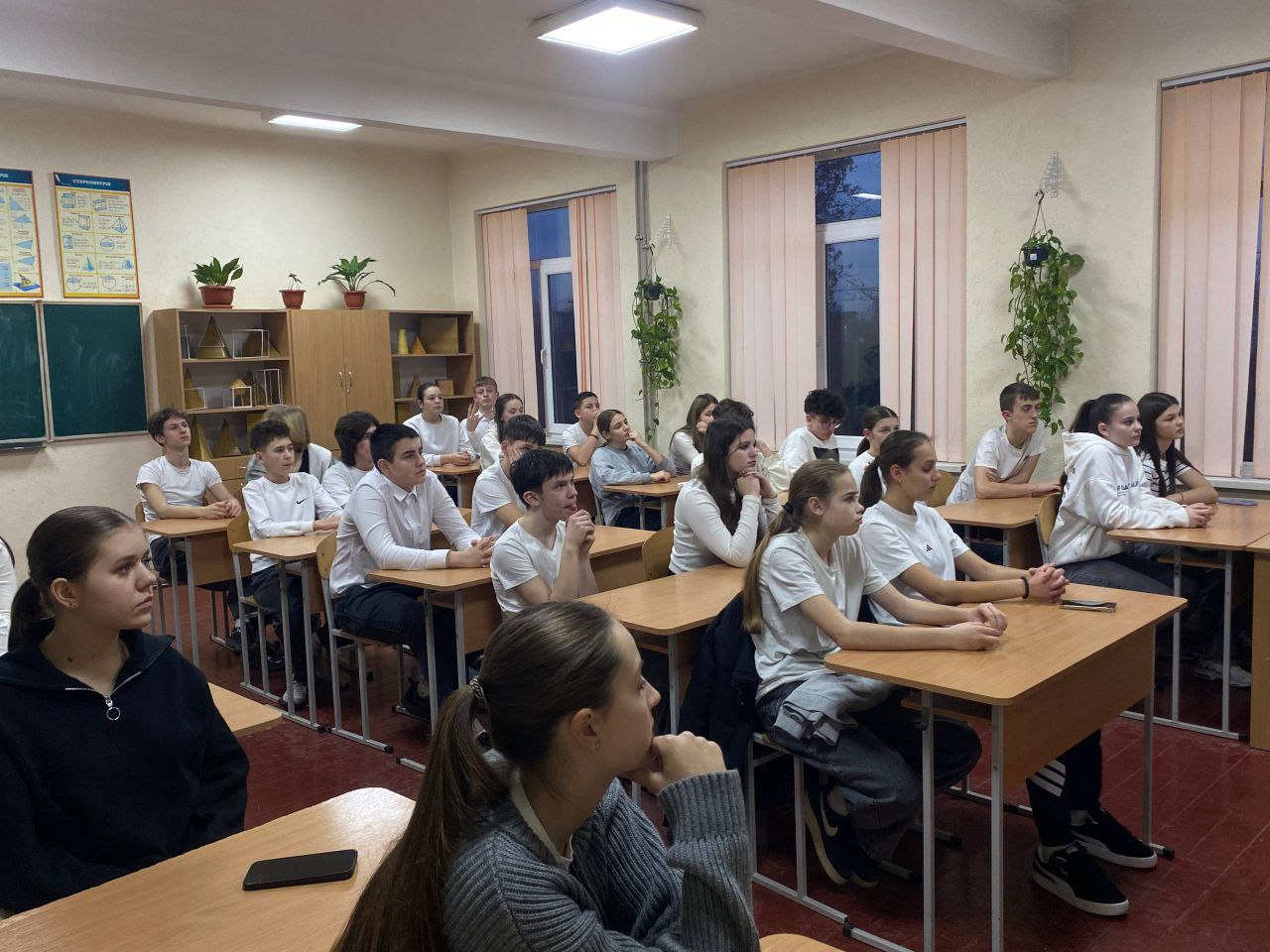
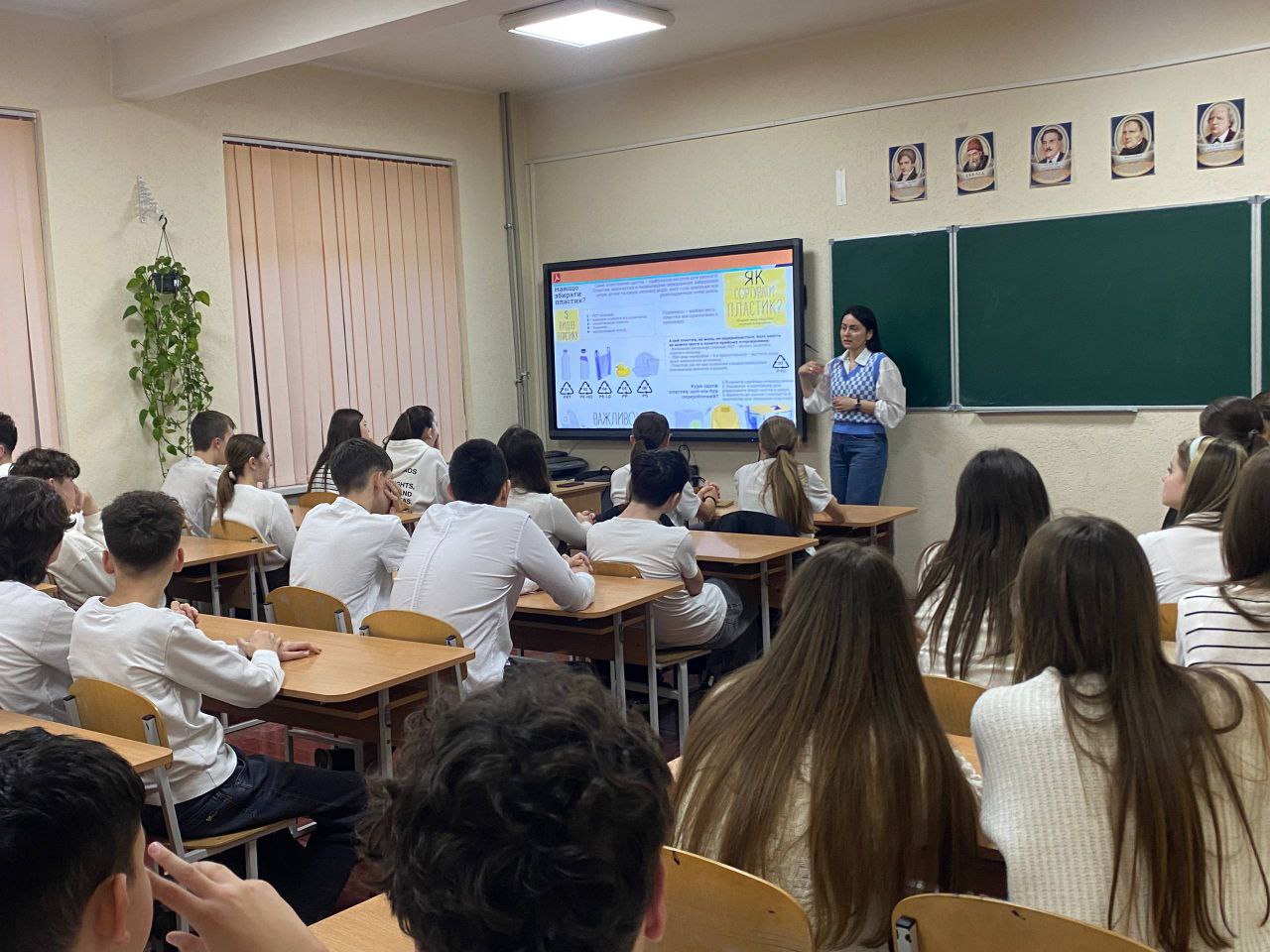
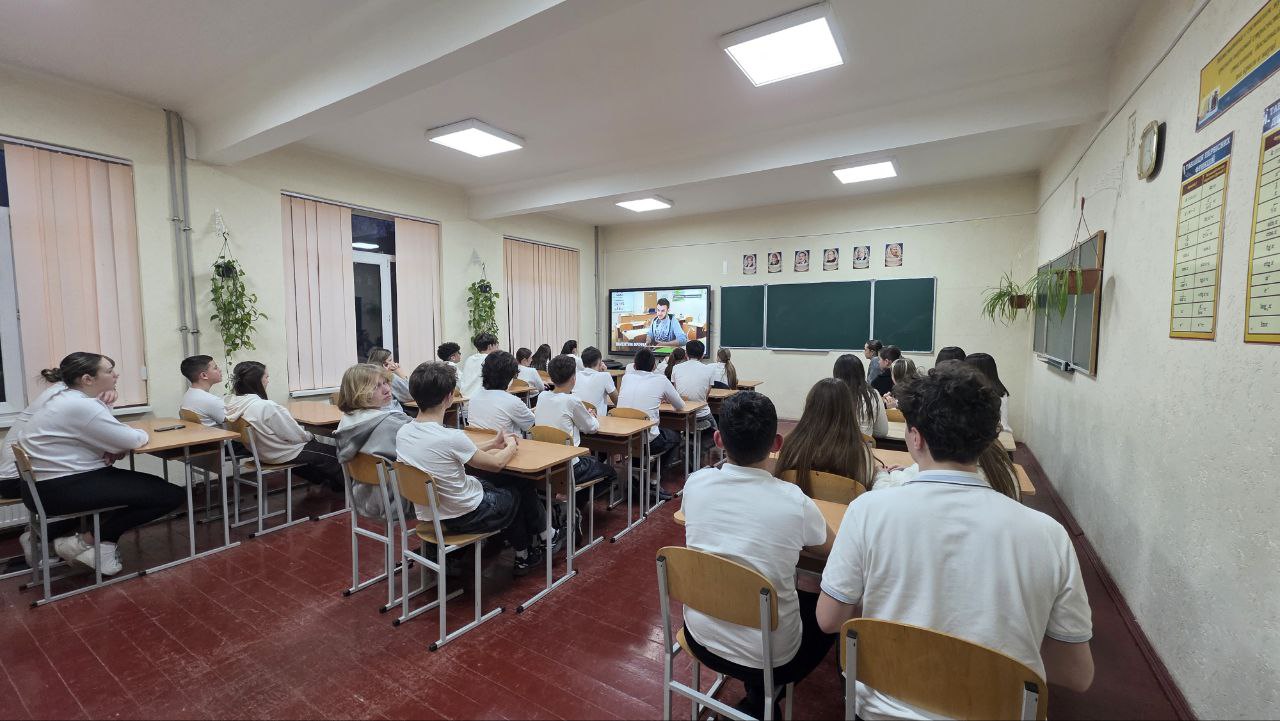
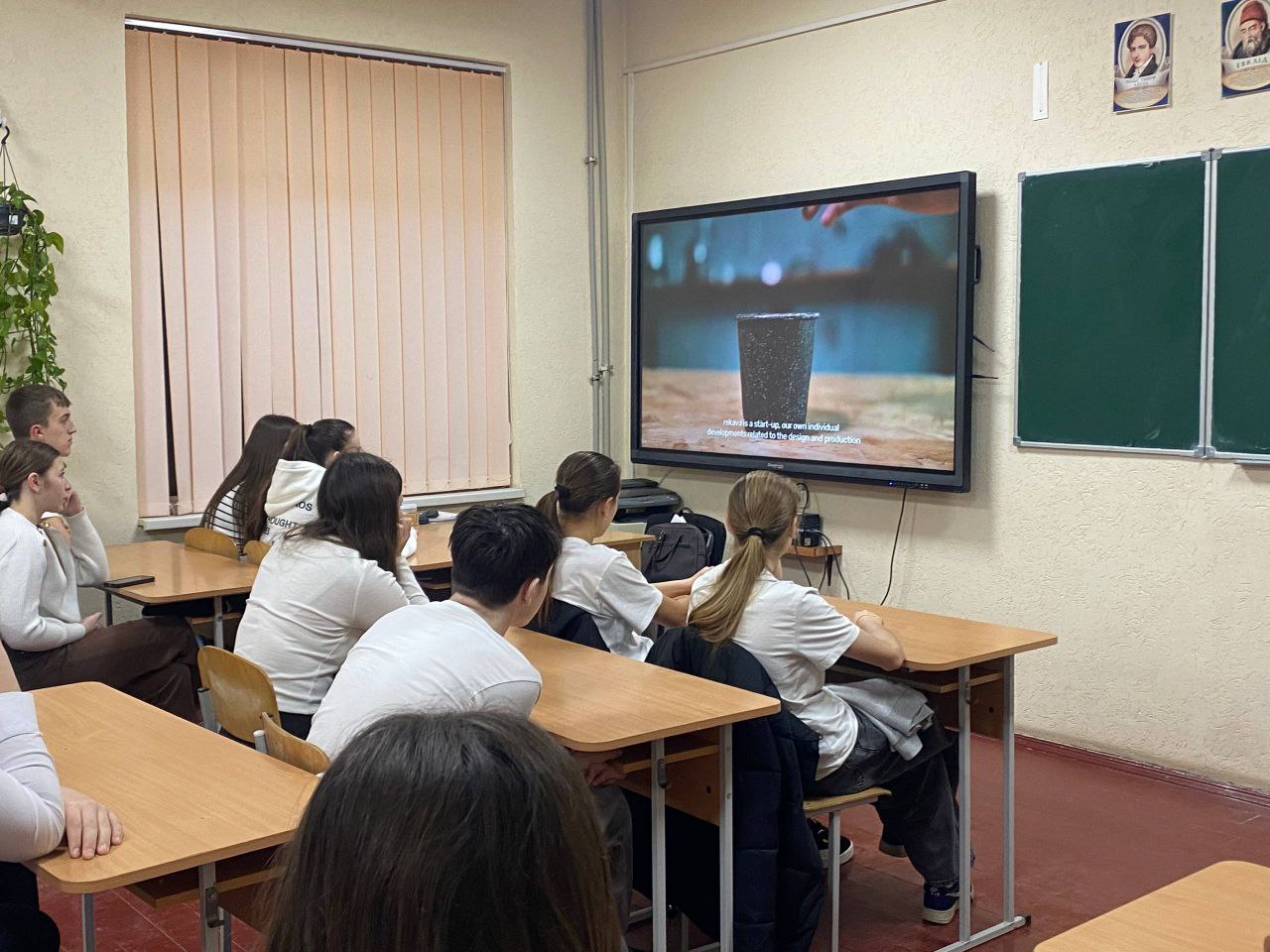
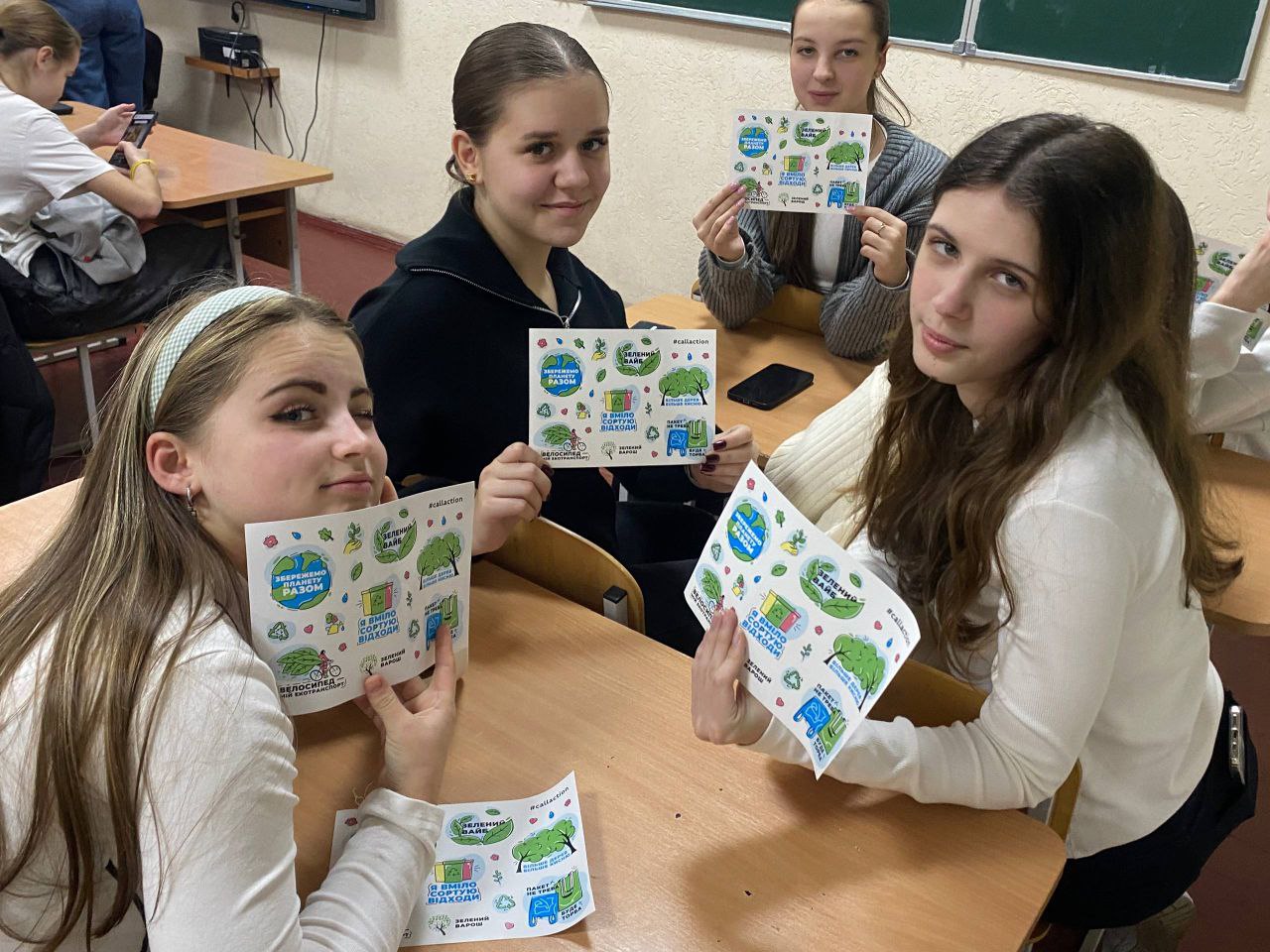
Our team visited the Uzhhorod Scientific Lyceum, where we conducted a series of training sessions for upper secondary school students. During the program, the primary focus was on the concepts of recycling, reuse of resources, and waste reduction. A dedicated session introduced Ukrainian and international environmental startups, demonstrating that sustainable approaches can be not only environmentally sound but also economically viable.
Particular interest among students was sparked by the topic of producing paper from fallen leaves. We explored the example of an idea developed by Valentyn Frechka, a 10th-grade student, which evolved from a school experiment into a business project that is now being developed internationally. This case clearly illustrated that environmental innovations can originate within the school environment and have a tangible impact on the market and society.
The training sessions also addressed waste reduction, sorting, and recycling, as well as the role of each individual in shaping sustainable practices at the community level. Students were encouraged to assess their own consumption habits and analyze which behaviors could be changed with minimal effort but significant environmental benefits.
Environmental education and awareness-raising in schools represent an investment in the long-term resilience of society. They help shape a generation capable of making informed decisions, supporting environmental initiatives, and implementing innovative approaches across various sectors—from science and business to local governance.
Throughout 2025, our team engaged with more than 500 participants by delivering lectures, educational events, environmental actions, and training sessions aimed at increasing awareness and fostering responsible attitudes toward environmental protection. Within the framework of the Call Action project, we systematically promoted environmental conservation and waste reduction through education and outreach, providing a positive and practice-oriented example of environmental responsibility. Systematic environmental education from an early age is a key driver of the transition to sustainable development and responsible stewardship of the environment.
.jpg)
.jpg)

John Doe
Lorem ipsum dolor sit amet, consectetur adipisicing elit. Pariatur quidem laborum necessitatibus, ipsam impedit vitae autem, eum officia, fugiat saepe enim sapiente iste iure! Quam voluptas earum impedit necessitatibus, nihil?
Reply
John Doe
Lorem ipsum dolor sit amet, consectetur adipisicing elit. Pariatur quidem laborum necessitatibus, ipsam impedit vitae autem, eum officia, fugiat saepe enim sapiente iste iure! Quam voluptas earum impedit necessitatibus, nihil?
Reply
John Doe
Lorem ipsum dolor sit amet, consectetur adipisicing elit. Pariatur quidem laborum necessitatibus, ipsam impedit vitae autem, eum officia, fugiat saepe enim sapiente iste iure! Quam voluptas earum impedit necessitatibus, nihil?
Reply
John Doe
Lorem ipsum dolor sit amet, consectetur adipisicing elit. Pariatur quidem laborum necessitatibus, ipsam impedit vitae autem, eum officia, fugiat saepe enim sapiente iste iure! Quam voluptas earum impedit necessitatibus, nihil?
Reply
John Doe
Lorem ipsum dolor sit amet, consectetur adipisicing elit. Pariatur quidem laborum necessitatibus, ipsam impedit vitae autem, eum officia, fugiat saepe enim sapiente iste iure! Quam voluptas earum impedit necessitatibus, nihil?
Reply
John Doe
Lorem ipsum dolor sit amet, consectetur adipisicing elit. Pariatur quidem laborum necessitatibus, ipsam impedit vitae autem, eum officia, fugiat saepe enim sapiente iste iure! Quam voluptas earum impedit necessitatibus, nihil?
Reply