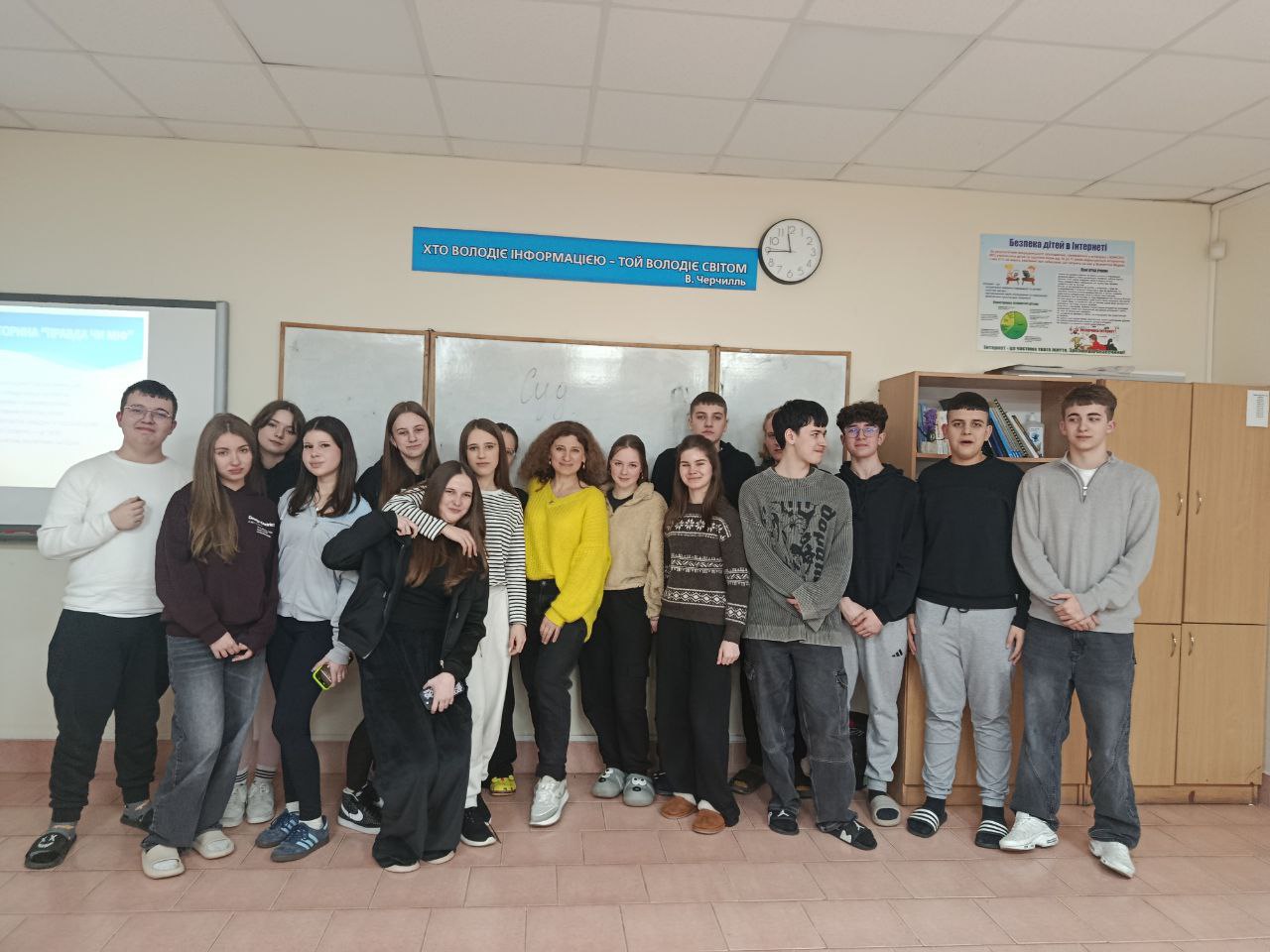
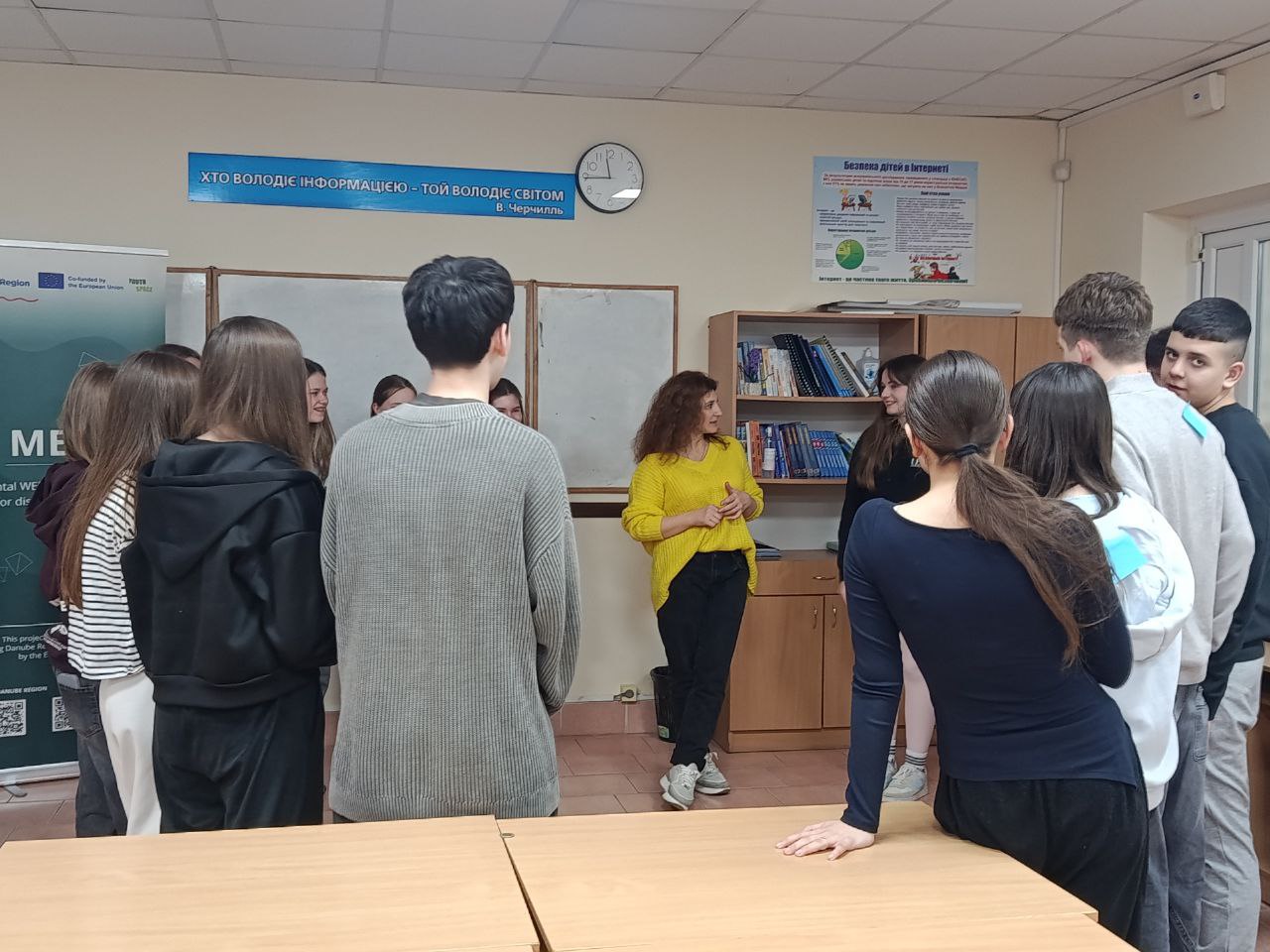
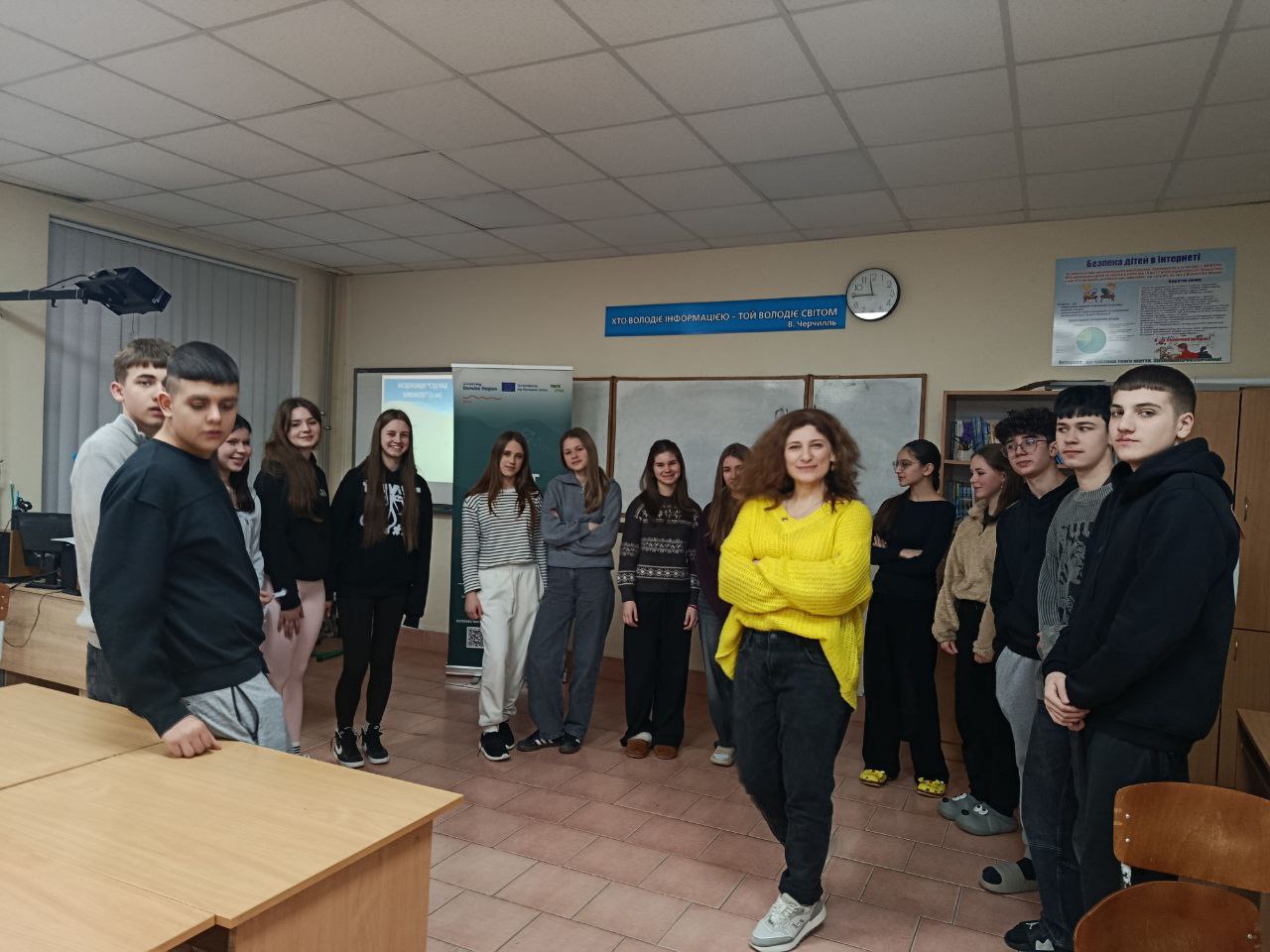
An interactive environmental education session for senior students took place at the Uzhhorod Scientific Lyceum, focusing on responsible consumption and the impact of waste on the environment. The training was conducted by Maria Rushchak, a representative of the NGO “Zelenyi Varosh,” youth mentor, and environmental lecturer.
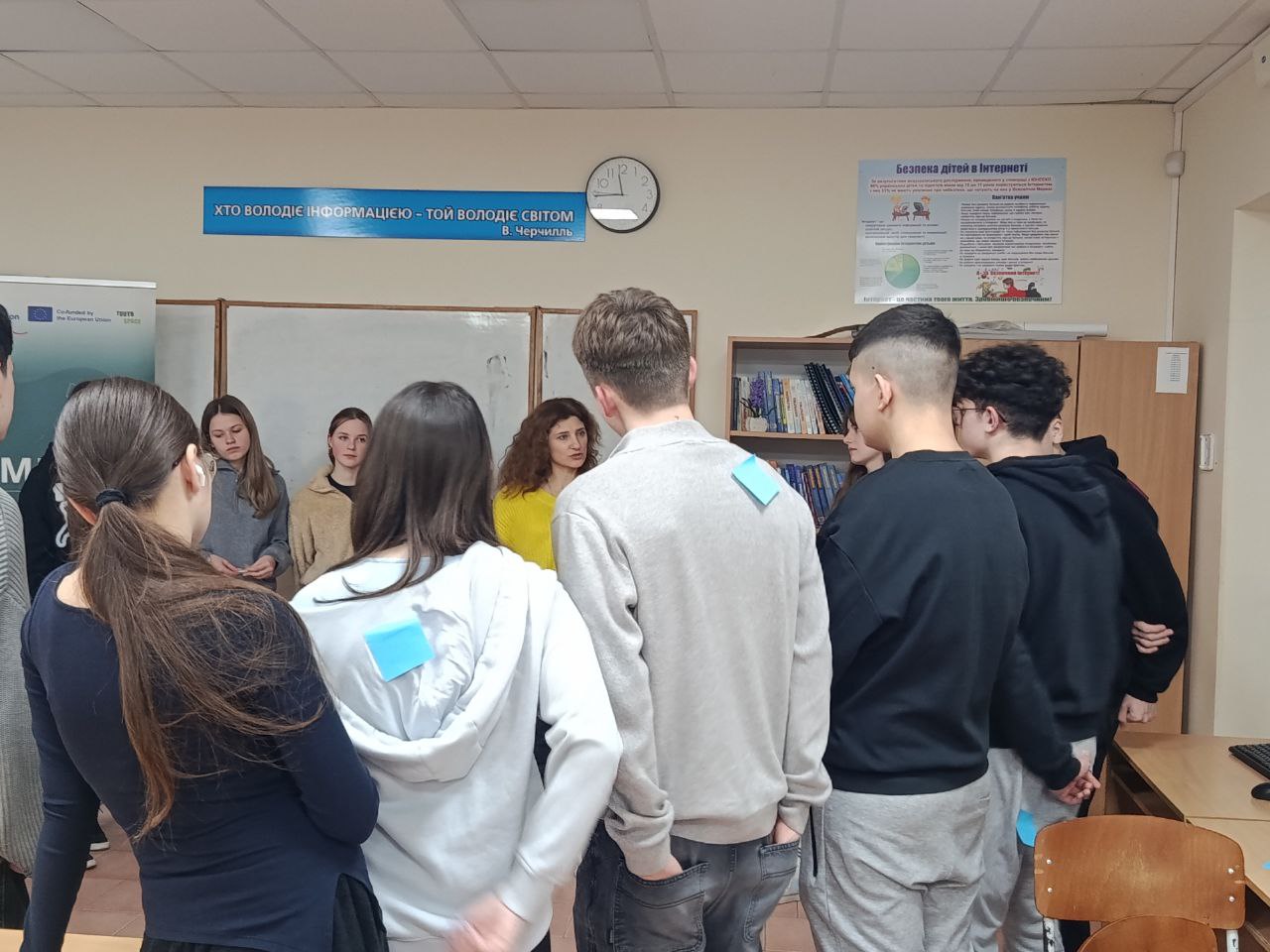
The event was designed as an engaging and participatory learning experience, combining discussion, role-playing activities, and practical exercises. This approach allowed students not only to learn facts about environmental challenges but also to reflect on them through dialogue and collaborative problem-solving. According to the organizers, the students showed strong interest in the topic, actively participated in discussions, and asked thoughtful questions throughout the session.
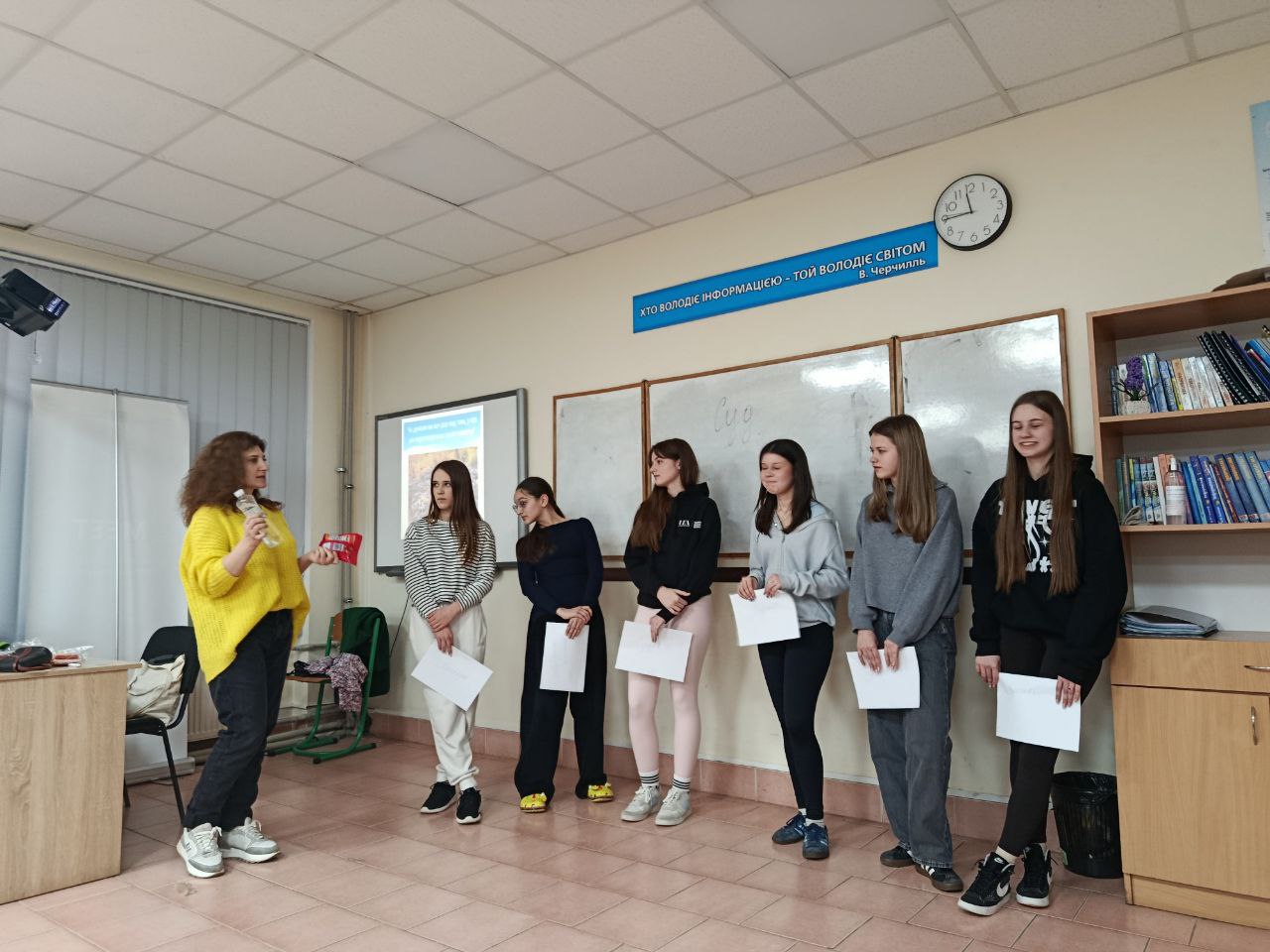
“The Trial of the Plastic Bottle”
One of the most engaging parts of the training was the interactive activity called “The Trial of the Plastic Bottle.” Students took on different roles, including the consumer, the manufacturer, nature, future generations, and even the plastic bottle itself.
Each side presented its arguments: on the one hand, plastic offers convenience and affordability; on the other, it causes significant harm to the environment and human health. Through the discussion, students reached an important conclusion — responsibility is shared among many actors, but meaningful change largely depends on the everyday choices of consumers.
From Purchase to Pollution
During the exercise “The Journey of Plastic,” students traced the life cycle of a typical plastic item — from the moment it is purchased to its eventual impact on the environment.
The discussion included the issue of microplastics, which enter water systems, soil, and the food chain. Real photographs of landfills and polluted areas created a powerful emotional impact and encouraged students to reflect on the scale of the problem.
Waste Sorting and Plastic Labeling
Another part of the training focused on practical knowledge about waste sorting. Students learned how to identify different types of plastic packaging and understand the meaning of the recycling symbols and numbers found on products.
Participants also discussed which types of plastic are realistically recyclable in Ukraine and considered simple habits that could be changed immediately — both at home and at school.
Truth or Myth?
Students also took part in a fast-paced quiz game called “Truth or Myth,” where they tested their knowledge about common environmental misconceptions.
Among the questions discussed were whether paper coffee cups are truly made entirely of paper, whether sorting waste alone is enough if recycling systems are imperfect, and whether the actions of a single school class can influence the environmental situation in a city.
The game helped combine scientific information with critical thinking and challenged widely held environmental myths.
Why Do Illegal Dump Sites Appear?
Another important discussion focused on the issue of illegal waste dumping sites. Together with the lecturer, students explored the factors that often lead to such problems: a lack of environmental responsibility, shifting blame onto others, insufficient waste management infrastructure, and indifference toward shared public spaces.
The conversation highlighted that environmental challenges are not only ecological but also social in nature.
A Circle of Understanding with Nature
The training concluded with a reflective activity called the “Circle of Understanding with Nature.” Each student was invited to consider three questions: what personal habits might harm the environment, what changes they are willing to make, and which specific action they are ready to take as a personal commitment.
This moment of reflection helped transform knowledge into personal responsibility.
Building Environmental Awareness Among Young People
According to Maria Rushchak, environmental education for teenagers is a crucial step toward building a responsible society. It is during adolescence that attitudes toward nature and everyday habits begin to form and often remain throughout life.
The training at the Uzhhorod Scientific Lyceum became more than just an informational lecture — it created a space for meaningful discussion and awareness. Students showed genuine interest in the topic and actively engaged in the activities and conversations.
Educational initiatives like this help nurture environmental awareness among young people and remind us that meaningful change begins with the everyday choices of each individual.

John Doe
Lorem ipsum dolor sit amet, consectetur adipisicing elit. Pariatur quidem laborum necessitatibus, ipsam impedit vitae autem, eum officia, fugiat saepe enim sapiente iste iure! Quam voluptas earum impedit necessitatibus, nihil?
Reply
John Doe
Lorem ipsum dolor sit amet, consectetur adipisicing elit. Pariatur quidem laborum necessitatibus, ipsam impedit vitae autem, eum officia, fugiat saepe enim sapiente iste iure! Quam voluptas earum impedit necessitatibus, nihil?
Reply
John Doe
Lorem ipsum dolor sit amet, consectetur adipisicing elit. Pariatur quidem laborum necessitatibus, ipsam impedit vitae autem, eum officia, fugiat saepe enim sapiente iste iure! Quam voluptas earum impedit necessitatibus, nihil?
Reply
John Doe
Lorem ipsum dolor sit amet, consectetur adipisicing elit. Pariatur quidem laborum necessitatibus, ipsam impedit vitae autem, eum officia, fugiat saepe enim sapiente iste iure! Quam voluptas earum impedit necessitatibus, nihil?
Reply
John Doe
Lorem ipsum dolor sit amet, consectetur adipisicing elit. Pariatur quidem laborum necessitatibus, ipsam impedit vitae autem, eum officia, fugiat saepe enim sapiente iste iure! Quam voluptas earum impedit necessitatibus, nihil?
Reply
John Doe
Lorem ipsum dolor sit amet, consectetur adipisicing elit. Pariatur quidem laborum necessitatibus, ipsam impedit vitae autem, eum officia, fugiat saepe enim sapiente iste iure! Quam voluptas earum impedit necessitatibus, nihil?
Reply